
Specialist Vascular & Endovascular Care in Hyderabad
Hyderabad Vascular Center focuses on the diagnosis and management of diseases affecting arteries, veins and the vascular system, with treatment selected according to each patient's condition and clinical requirements.
Understanding Vascular Health
The circulatory system consists of arteries that carry oxygen-rich blood away from the heart and veins that return blood toward the heart. Problems affecting blood vessels can interfere with circulation in different parts of the body.
Our Approach to Vascular Treatment
The HVC source explains that vascular surgeons evaluate vascular conditions and help patients understand available treatment options. Depending on the condition, treatment may involve medication, exercise and risk-factor management, minimally invasive intervention or surgery.
Long-Term Vascular Care
Some vascular conditions require ongoing monitoring and management. The HVC source emphasizes the role of vascular surgeons in maintaining long-term relationships with patients who have chronic vascular conditions.
- Assessment of symptoms and vascular risk factors
- Review of diagnostic imaging
- Discussion of available treatment approaches
- Follow-up when ongoing vascular care is required
Vascular Conditions Across the Body
Vascular surgeons manage diseases affecting blood vessels in areas beyond the heart and brain, including the neck, aorta, abdomen, legs and feet.
Arterial Disease
Evaluation and treatment of narrowed or blocked arteries, including peripheral arterial disease affecting the legs and feet.
Aortic Conditions
Management of selected diseases involving the aorta after it leaves the heart, including aneurysm and dissection.
Carotid Disease
Assessment and treatment of selected carotid artery conditions affecting blood vessels in the neck.
Venous Disease
Management of conditions such as varicose veins, chronic venous disease and selected deep vein thrombosis cases.
Diabetic Foot
Vascular assessment and treatment planning for diabetic foot problems, especially when circulation is impaired.
Vascular Access
Creation and management of dialysis vascular access, including AV fistula procedures and selected access interventions.
When Blood Flow Is Compromised
Vascular disease can affect different organs and limbs. Identifying the underlying circulation problem helps the clinical team determine the appropriate management pathway.
Recognize symptoms
Symptoms such as leg pain while walking, swelling, visible varicose veins or non-healing wounds may warrant vascular evaluation depending on the clinical context.
Clinical assessment
A vascular specialist reviews the patient's history, symptoms and examination findings.
Vascular imaging when needed
Tests such as Doppler or duplex ultrasound and other vascular imaging may be used when clinically indicated.
Discuss treatment options
Depending on the condition, treatment may include medical management, surveillance, minimally invasive procedures or surgery.
Vascular Treatments & Procedures
The HVC website lists a broad range of vascular and endovascular services.
Evaluation and treatment of aortic aneurysmal disease.
Urgent evaluation and management of Type A and Type B dissection.
Assessment of blocked or narrowed peripheral arteries.
AV fistula and dialysis vascular access care.
Endovenous laser treatment for selected venous disease.
Medical adhesive-based venous closure for selected patients.
Selected catheter-based treatment for deep vein thrombosis.
Vascular and surgical care for diabetic foot complications.
Doppler, duplex and non-invasive vascular testing.
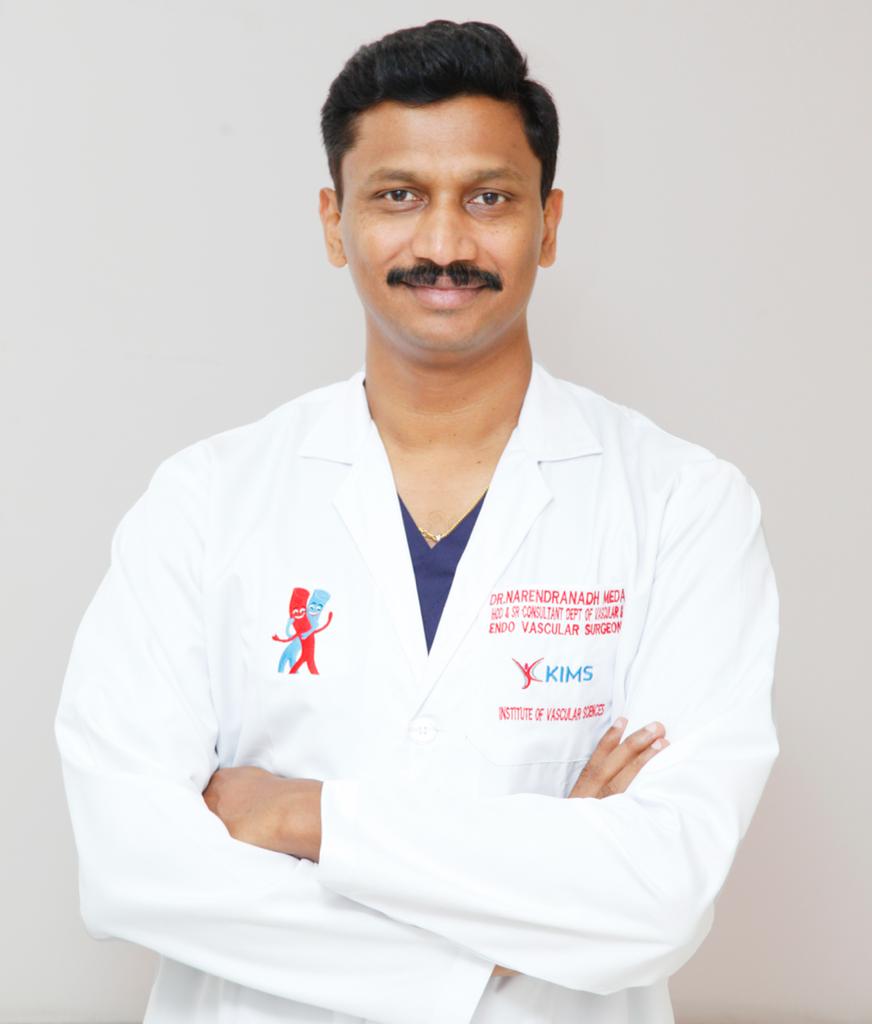
Dr. Narendranadh Meda
The HVC About Us page identifies Dr. Narendranadh Meda as the vascular surgeon available for consultation at the center. His dedicated profile lists qualifications and expertise in vascular and endovascular surgery.
When Should You See a Vascular Surgeon?
The HVC source notes that patients may reach a vascular surgeon through a referral or after a vascular condition is identified. Some symptoms may warrant specialist evaluation depending on the clinical situation.
Leg Pain While Walking
Persistent walking-related leg pain can be associated with peripheral arterial disease and may require vascular assessment.
Leg Swelling
Unexplained or persistent leg swelling can have several causes, including venous conditions that may require evaluation.
Non-Healing Wounds
Non-healing wounds of the foot or leg can be associated with poor circulation, especially in people with diabetes or arterial disease.
Varicose Veins
Visible, symptomatic or progressive varicose veins may require evaluation for underlying venous reflux.
Known Vascular Disease
Patients with established vascular disease may benefit from specialist follow-up and risk-factor management.
Abnormal Vascular Imaging
Findings on Doppler, CT angiography or other vascular imaging may require specialist interpretation and treatment planning.
Hyderabad Vascular Center – About Us FAQs
What is Hyderabad Vascular Center?
Hyderabad Vascular Center is a vascular-focused healthcare center in Hyderabad providing evaluation and treatment for arterial, venous and other vascular conditions.
What does a vascular surgeon treat?
Vascular surgeons treat diseases affecting blood vessels, including selected conditions involving the aorta, carotid arteries, peripheral arteries, veins, vascular access and diabetic foot circulation.
Does every vascular condition require surgery?
No. The HVC About Us page explains that treatment may include medication, exercise, monitoring, minimally invasive procedures or surgery depending on the patient's condition and requirements.
What vascular conditions are treated at HVC?
The HVC website lists aortic aneurysm, aortic dissection, vascular access problems, arteriovenous malformations, varicose veins, diabetic foot, DVT, thoracic outlet syndrome, peripheral arterial disease, renal vascular disease, mesenteric ischemia and other vascular conditions.
Does HVC provide minimally invasive vascular treatment?
Yes. The HVC website lists endovascular surgery and multiple minimally invasive vascular procedures, including selected treatments for aneurysms, arterial disease, DVT, varicose veins and vascular access problems.
When should I see a vascular surgeon?
Depending on the clinical situation, persistent leg pain while walking, leg swelling, non-healing wounds, symptomatic varicose veins, suspected DVT or known vascular disease may warrant vascular evaluation.
Who is the vascular surgeon at Hyderabad Vascular Center?
The About Us page identifies Dr. Narendranadh Meda as the vascular surgeon available for consultation at the center.
Where is Hyderabad Vascular Center located?
The HVC About Us page lists BN Reddy Colony, Rai Durg, Hyderabad, Telangana 500033, along with the center's contact details.
Need a Vascular Consultation?
Discuss your symptoms, vascular reports or treatment options with the HVC team and understand which evaluation or treatment pathway may be appropriate for your condition.
Medical Disclaimer: This page provides general information about Hyderabad Vascular Center and vascular care. Diagnosis and treatment decisions require individual clinical assessment by a qualified healthcare professional.